Stoicism and Stephen Covey – You don’t need to worry anymore!

“What upsets people is not things themselves but their judgments about the things” The Enchiridion, Epictetus (translation by William R Connolly)

How would you feel if you did not have to worry again? Is this attainable? The Stoics certainly thought so.

More recently, Stephen Covey revisited this theme and provided a mental model to approach about such situations.

It becomes amazing how, sometimes, key tenets of Ancient Philosophy find their way into modern popular handbooks and practical how-to guides.

It is useful to occasionally revisit and embrace the transformative nature of these tenets, in combination with their modern variations, in an effort to lead more meaningful, productive and fulfilling lives (professionally and in the private sphere).

Let’s look at one of these tenets and mental schemes in action.
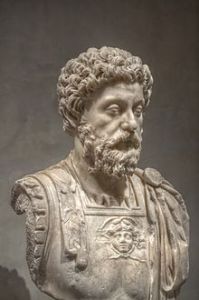
 

Marcus Aurelius

Marcus Aurelius


STOICISM

Stoicism is a movement that started with Zeno of Citium at the early 3rd BCE. Other major philosophers involved in this movement were Cicero, Seneca, Epictetus and Marcus Aurelius (you can find more information here).

The basic tenet of the movement was “apatheia” (equanimity). Stoics posit that one way to attain this state of mind is by recognizing what lies within our power or influence and what is outside. Thereafter, come to terms with this realization.

Meric Casaubon elaborated on this thought in his translation of Marcus Aurelius’ Meditations as follows:

“Two points in the Stoic system deserve special mention. One is a careful distinction between things which are in our power and things which are not. Desire and dislike, opinion and affection, are within the power of the will; whereas health, wealth, honour, and other such are generally not so. The Stoic was called upon to control his desires and affections, and to guide his opinion; to bring his whole being under the sway of the will or leading principle…..” (Meditations by Marcus Aurelius, translated by Meric Casaubon)
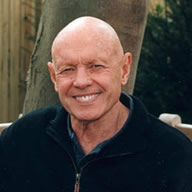
 

Stephen Covey


STEPHEN R. COVEY

Stephen Covey mentions more or less the same theme but expands on it providing a mental scheme enabling us to better visualize how to go about this basic idea.

His mental scheme consists of concentric circles that portray our circle of influence and our circle of concern (see picture below).
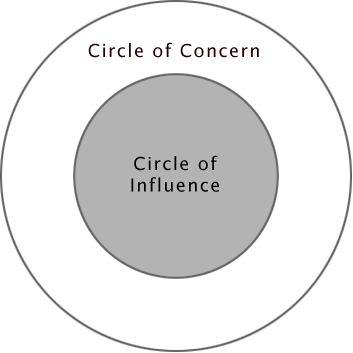
CIRCLE OF INFLUENCE

Stephen contends that we should first reflect on “where we focus our time and energy” and then consciously refocus our efforts to what we can influence, in an effort to increase our effectiveness.

Specifically, usually, we tend to worry or be concerned about many things such as, our health, our children, problems at work, the national debt, nuclear war. These concerns can and should be separated based on our mental and emotional involvement but also based on those for which we have some real control over and those that we cannot influence at all.

Thereafter, by focusing our time and energy in influencing those that we have some kind of control over we succeed and hence, we may also increase our circle of Influence further. We see people who embrace this behaviour being positive and empowered.

CIRCLE OF CONCERN

On the other hand, we see others that focus their time and energy on things they have no real influence over. These tend to blame and accuse circumstances or people and use reactive language. Eventually, the Circle of Influence of these people will shrink. I am sure you can think of a few people who embrace the one or the other behaviour and can possibly reflect on the consequences of their stance in life.

Like the ancient Stoics, what Stephen rightly highlighted is that we have to look at our attitude towards these situations and change our perspective so we can be “highly effective” in our lives. This happens if we do not waste time and energy on worrying about things we cannot control or influence but instead focus our energy to influence those that we can.

You can read more about this mental scheme here.


SCIENCE ABOUT THE HEALTH BENEFITS OF A POSITIVE ATTITUDE

Until recently this could have been described as a feel good and  useful belief. More recent scientific studies though have started to test even such esoteric beliefs.

I have written here about an insightful talk from Kelly McGonical which details a recent study that looks at the link between attitudes and cardiovascular disease.

In particular, this study links the attitude we have against stressful situations to specific responses our body has and the associated risk for development of cardiovascular disease.


CONCLUSION

People respond to different challenges in a different way and develop their own defense mechanisms to deal with the vicissitudes of life.

Practical philosophy such as the ideas described in this blogpost provides an extremely useful guide to think about things and be-free oneself from behaviours that damage productivity, happiness and the attainment of fulfillment in life.

A great resource to continue this journey with is Alain De Botton’s The Consolations of Philosophy (an easy to read and immensely entertaining book or DVD).

Maya Angelou who recently passed away put it succinctly when she said:

“You may not control all the events that happen to you, but you can decide not to be reduced by them”, Maya Angelou, Letter to My Daughter:

What are the tenets, beliefs or thoughts that help you to get through the day?
 

How to develop a winning organisation today! (An inspiring talk)

“The real battle is not against competitors. The real battle is against ourselves. Against our bureaucracy, against our complicatedness” – Yves Morieux

Sometimes you come across a talk that really resonates.

I have read a few books, essays and articles on organizational behavior and have explored the issue of Team Development and Team Engagement here and here.

Yves Morieux

Yves Morieux

Yves Morieux’s speech was remarkable in the way that he consolidates ideas and concepts and comes up with a new approach that focuses both on Organizational Performance whilst at the same time achieving Employee Satisfaction.

Yves Morieux gave this speech at the popular TED talks’ forum and posited that the two pillars of Management i.e.

i) the hard approach of structures, processes, systems etc and

ii) the soft approach of interpersonal relationships, feelings, traits etc,

which are the mainstream ways we use to engage our employees and succeed as organizations, are obsolete.


He then provided a different way to look at a winning organization focusing on what he called the SMART SIMPLICITY system. He contends that, based on this system, winning organizations can be built in today’s hyper-competitive world.

The system’s main focus is to remove complexity using six basic rules.

These are:

1) Understand what your people do.

2) Reinforce Integrators

3) Increase Total Quantity of Power

4) Extend the Shadow of the Future.

5) Increase Reciprocity and

6) Reward Those who Cooperate.

The examples used during the talk and the overall concept is well thought out.

Hope you enjoy the talk:


==========================================================================

Image courtesy of http://www.ted.com


Procurement as a differentiator – Part 3 (what kind of differentiation?)

In a previous post (Part 1) I explored an expanded definition of what Procurement is becoming and then how it can become the link between Customer Demand and Supplier Innovation.

Then (Part 2), how Procurement’s potential could reinforce the basic Strategies of Organizational differentiation.

In this post I will explore in more detail what this differentiation could look like.

Innovation Anna betts

C. PROCUREMENT AND DIFFERENTIATION

The argument that Procurement can become a key Differentiator is supported by the fact that Innovation is a key contributor of business growth and that Procurement can be a great curator and creator of Innovation.

Jimmy Anklesaria in his great book “Supply Chain Cost Management” posits that Procurement should:

“leverage [the] collective intelligence of the extended enterprise (your customers and their customers, your suppliers and their suppliers), and generate substantial results”.

and also that

the next generation of cost management is: “breakthrough solutions”.

C1. COST LEADERSHIP AS A DIFFERENTIATOR

Jimmy Anklesaria also highlights the fact that genuine cost management is different from cost cutting.

Indeed, genuine Cost Management does look at the business as a whole and asks questions like:

-Do we really need this service?

-What is the value this service provides to the business?

-Is there a better way of doing this?

Moreover, he stresses the importance for Procurement to move towards embracing a Strategic perspective as, according to him, successful Cost Management will be the key differentiator in the future:

“So, here we are in the twenty-first century. What will differentiate your firm from its competition? Will it be technology? Or maybe it’ll be quality and reliability? Perhaps speed of delivery? Or excellent customer service? Or do you think your firm is the onoly one in the industry doing e-business? The answer,…, is that nowadays, frequent technological breakthroughs, high quality, reliability, on time delivery, top customer service, and e-business are merely the prerequisites for being in the global race for market share. Today’s customer expects this from a supplier; rather, demands it. And there are enough firms around the world that have overcome the “preliminary rounds” of technology, quality, reliability, delivery, service and e-business.

So, why should they choose your firm?

In a few years the only differentiation will be cost. Companies that best manage their costs through the entire supply chain to bring you the latest technology, best quality with on-time delivery at a price lower than the others will take home the prize-your check. There is no prize for coming second”.

C2. INNOVATION AS A DIFFERENTIATOR

Now, reflecting on the power of Innovation to drive growth we find evidence in Kate Vitasek’s reminder of Solow’s Law that states that business growth is driven by innovation.

Specifically,

“The population and the labour supply grow at a constant rate and capital intensity (or capital per employee) can be regulated. But without technological progress, Solow continued, growth rates for capital, labour and total production would all be about the same. As a result, technological development would be the motor for economic growth over the long haul. In Solow’s model, if continuous technological progress can be assumed, growth in real incomes will be determined by technological progress”. (Kate Vitasek, outsourcemagazine)

But probably the most important contribution Solow demonstrated was that only a small proportion of annual growth could be explained by increased inputs of labour and capital. Just how small? Thirteen percent.

In other words technological growth makes the crucial difference when it comes to economic growth – a whopping 87 percent. Now keep in mind technological growth happens in two ways: product and process improvements.

For both these ways, Procurement can play a pivotal role.

This notion is also reinforced by the view of Cavinato and Kauffman when they detail Technology Advancement (e.g. Product and/or Process Improvement) and Supply Chain Synchronization (e.g. Process Improvement) among the four key trends that will most likely fundamentally shape tomorrow’s procurement practices (here). The other two key trends being Globalisation and Industry Consolidation.


CONCLUSION

I think that the above amounts to a strong argument for Procurement to be one of the primary differentiators for the organisations of tomorrow. Utilizing the Procurement function towards clever Cost Management and stimulating Innovation will mean that organizations will empower a yet not fully explored source of creativity and immense potential.


Where do you think Procurement will be and should be by 2020?


==========================================================================

Image courtesy of Anna Betts/ www.flickr.com


Procurement as a differentiator – Part 2

In the previous post (here) I explored an expanded definition of what Procurement is and how it can evolve into becoming the link between Customer Demand and Supplier Innovation.

It is important though to also explore the Procurement potential through the lens of Michael Porter’s model of Organisational Success in an effort to understand how the basic Strategies of differentiation could be reinforced through the Procurement profession.

Michael Porter

Michael Porter

B) PORTER AND COUSINS MODEL FOR ORGANISATIONAL SUCCESS

Michael Porter in his seminal book “Competitive Advantage: Creating and Sustaining Superior Performance” describes three generic strategies for businesses.

These are:

“”Cost Leadership” (no frills), “Differentiation” (creating uniquely desirable products and services) and “Focus” (offering a specialized service in a niche market)”. (mindtools)

The above easily brings to mind the airline Tigerair reputed for low cost, 3M reputed for innovation and Qantas which with the formation of Jetstar pursued the “Focus” strategy (niche market differentiation).

Reflecting on this model it is evident that Procurement can clearly respond to 2 out of 3 of Porter’s differentiation strategies i.e. Cost Leadership and Differentiation and can affect the 3rd one.

B1. COST LEADERSHIP

Cost management and cost cutting has been an archetypal quality for Procurement.


B2. DIFFERENTIATION

I believe that the second differentiator i.e. Innovation, is the next frontier. Procurement can and is slowly moving

from

“purchasing goods and services at competitive prices”

to

also focusing on cost reduction techniques, improving cycle times, reducing time-to-market, and constantly seeking to exploit actual and potential innovations from within the supply market. 

Moreover, in the current environment, and considering Strategic Supply Management, the Organization should constantly re-evaluate what is core and what could be outsourced. So, Make or Buy decisions will become more common.

As Cousins et al, highlights:

“Supply strategy is increasingly a factor in identifying the organization’s boundaries. Supply management assumes responsibility for developing and implementing supply structures that will sustain the competitive position of the firm” (Cousins P. et al, 2008, Strategic Supply Management)

B3. CAVEAT

The necessary caveat of course is that the Organization views and enables Procurement to function in a strategic and collaborative way, internally and externally, and that the Organization has and is clearly communicating the preferred differentiation strategy it has chosen to all, so, that alignment of goals and business unit strategies is ensured.


In the next and final post of this three-part series, I will explore this differentiation could look like.


==========================================================================

Image courtesy of Wikipedia / www.wikipedia.com