“3C+1L”: The 4 basic qualities of an exceptional team member.

Can you describe an exceptional team member in five words?

Quite hard isn’t it. However, I believe it can be done.

THE QUALITIES OF AN EXCEPTIONAL TEAM MEMBER

A good team member should be:

  1. Caring
  2. Curious
  3. Courageous and
  4. a Good Listener

Let’s see why these qualities form the basis of today’s peak performing workforce.

600px-Working_Together_Teamwork_Puzzle_Concept

SKILLS FOR A WORLD OF COMPLEXITY

As mentioned before here,the complexity of today’s team structures make it hard to have universal standards.

Teams come in many sizes and have varying interests and targets. They can be self-organizing, rigidly structured, matrix, adhoc etc.

Thus, you would employ your team depending on the unique qualities required each time.

For contemporary teams though, one thing is for certain:

One size doesn’t fit all.

In saying this, I believe that there may be some underlying qualities that EVERY supervisor, team leader or manager would want their team members to have.

I call these the “the 3Cs and 1L of an exceptional team member” and they are:

1. CARING

Good projects are those that meet the requirements in time and quality and also over-deliver. Those that, as marketing gurus would put it, delight the customer and aim to do more than just satisfy the stated needs.

Practically, what this means is that, taking advantage of good listening skills, you develop what is required (what is required can be describe as the stated needs) but at the same time also prepare for the unasked question, the remark that will inevitably be made. Then build this solution into the project or have the answer ready to go.

Caring enough to endeavour to reach an exceptional outcome is a great quality to have in every team.

Caring enough to consider alternatives, contingencies and ask questions is the key to successful task and project deliveries.

This means that the team member desires to do exceptional work, works on the skills required to take his/her work onto the next level and finally aspires to become what Seth Godin so eloquently described in his great book Linchpin (a book that is highly recommended. A visual summary can be found here).

2. CURIOUS

As mentioned and elaborated on here, innovation and continuous learning are qualities that will be essential for the workforce of the future.

Innovation means that teams are curious enough to ask the right questions, clarify the essential facts, look outside the organization for best practices and bring new ideas to the table.

A guide to a simple but effective method of innovation can be found here and here.

The most important question to ask

in the 21st century is not Why but

Why not?

3. COURAGEOUS

In the past century, especially considering the era of the Ford product lines, obedience was a quality that was highly regarded. Obedience in the sense that workers needed to blindly follow orders. This makes sense when the expectation was to work in factory process lines doing repetitive tasks over and over.

Well, we changed century since then and now, the common denominator is not blind obedience anymore but thinking, creating and “contributing” (as Peter Drucker would suggest).

Process work becomes more and more automated. This is because computers and robots can perform transactional /process work much faster than you and I can, at a fraction of the cost.

So, the right question to ask now is: “What is the value that each team member brings if process work becomes more and more extinct?”

As discussed here innovative thinking, having new ideas and also having the courage to challenge the status quo are qualities that are and will be much in demand in the 21st century.

So, if you have hesitations speaking up, I am afraid that in the near future there will be very few positions left, if any, that would not include the courage to articulate your ideas as a key skill.

Of course, speaking up means that you provide a meaningful, respectful, positive contribution to the organization towards securing the organization’s success.

4. GOOD LISTENING SKILLS (active listening)

Team work’s inherent requirement is to be able to effectively collaborate. Active listening is one of the cornerstones of collaboration.

From simply specifying the deliverables to “selling” the final project outcome, today’s organizational culture requires this essential skill.

Especially, considering the risk and repercussions of conflict in a team environment, which is notoriously emergent when deadlines are tight and/or stakes are high, good listening skills is something every team should have in abundance.

For an analysis on Conflict Management and reference of active listening as a very effective tool towards conflict resolution see the Harvard Law School’s special report here.

For me, these are the four underlying qualities which are the sine que non for every team member.

What do you think?

Image courtesy of Flickr user lumaxart of http://www.lumaxart.com
 

12 Essential Tools to maximise Productivity, Profitability, Employee Retention and Customer Satisfaction!

In previous posts (here and here) I explained how by using the concept of (Net Promoter Score) NPS you can establish  whether your notion of running a great Team / Organisation can be measured by this simple feedback loop.

But, how can you tell which areas you need to improve on when your internal NPS score is low?

Let’s look at a simple and practical method to do just that.

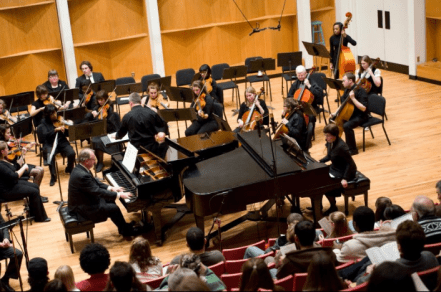
East Stroudsburg University

THE METHOD

The method I am suggesting is a simple 12 questions survey as detailed in Marcus Buckingham‘s books, “First Break All the Rules” and “Now, Discover Your Strengths”.

The survey was developed by the Gallup Organisation after their 25 year study of more than 1 million employees and 2,500 business units. What they found was a strong correlation between positive answers to this 12 question survey questionnaire and the below key business outcomes:

  • Productivity
  • Profitability
  • Employee retention and
  • Customer Satisfaction

THE GALLUP ORGANIZATION’S 12 QUESTION SURVEY:

    1. Do I know what is expected of me at work?
    2. Do I have the materials to do my work properly?
    3. At work, do I have the opportunity to do what I do best every day?
    4. In the last seven days, have I received recognition or praise for good work?
    5. Does my supervisor or someone at work seem to care for me as a person?
    6. Is there someone at work who encourages my development?
    7. At work, do my opinions seem to count?
    8. Does the mission of my company/department make me feel like my work is important?
    9. Are my coworkers committed to doing quality work?
    10. Do I have a best friend at work?
    11. In the last six months have I talked with someone about my progress?
    12. This last year, have I had opportunities at work to learn and grow?

                                                                                                   Marcus Buckingham, First Break all the Rules

QUESTION CLUSTERS

As you have probably distinguished the above 12 questions form 4 distinct clusters:

  1. Questions 1 and 2 -> “What do I get as an employee?”
  2. Questions 3 to 6 -> “What do I give as an employee?”
  3. Questions 7 to 10 -> “Am I in the right place to make the greatest possible contribution?”
  4. Questions 11 and 12 –> “How can we all give as a group?”

NECESSARY CAVEAT:

As with any such survey, running a productive culture survey means that you have established trust within your Team so that the survey outcomes are useful.

The survey can be run anonymously. This is recommended especially, the first time you run it as this can be used as a benchmark.

Thereafter and provided that you have worked on overcoming any trust issues, it is recommended to seek eponymous feedback so, you can discuss specifics with the respondents afterwards.


[Image courtesy of East Stroudsburg University / www.flickr.com]


The 9 Elements of an Effective Team (Part 2)

Last week (Part 1), I listed the 9 Elements that make an effective team.

These are:

1) Clear Goals

2) Good Team Structure

3) Right Culture and Skillset selection

4) Trust

5) Good Communication

6) Positive relationships

7) Accountability

8) Leadership

9) Feedback

Then, I specifically explored the first 4.  Let’s now look at the remainder.

wpid-Photo-28-Sep-2013-229.jpg

5) Good communication – Establish the environment for thriving innovation, participation and motivation within the team environment.

Conflict will come about. The important thing is to address it straight away and not let it eat away the foundations of the team.

Focus on strengths, frequent, positive and constructive feedback.

6) Positive relationships

The leader should give the example of taking risks and accepting that not all things will succeed. Then, praise the successes and support the missed targets enabling the team to lift their performances to the circumstances.

Some simple tips:

●     Select team members wisely.

●     Make choices based on merit.

●     Open communication channels between the team members. Each team member learning about each other is important so that each one appreciates and supports each other.

7) Responsibility and Accountability

Giving credit where it’s due but also holding people fully accountable for their actions or in-actions is always important.

As Roger Connors et al. highlight in their great book “The Oz Principle

“Individual and organizational results of people improve dramatically when people overcome the deceptive traps of the victim cycle and take the Steps To Accountability.”

But how do you identify if your team has such issues  e.g. if the team is trapped in the “victim cycle”.

A good first step is to observe if any of below practices are existent during the team’s interactions. Does the team:

  1. Ignore an issue or deny an issue exists
  2. Displays a “It’s not my job” attitude
  3. Engages in “Finger Pointing”
  4. Displays a constant “Tell me what to do” attitude.

8) Leadership

Maintain the context and scope of the team’s existence relevant and current to the shifting organisational goals.

Communicate the purpose and engage with each team member so that everybody understands how they fit in the wider picture and why what they do matters and affects the success of the company.

Lead by example!

9) Feedback.

Feedback is the underlying factor that ties everything together.

Unless there is a clear positive mechanism for non judgmental feedback loops then errors get repeated and eventually all the 8 other elements get affected.

A great feedback model can be found (here).

CONCLUSION AND ADDITIONAL RESOURCES

So, it seems that despite the varying nature of teams nowadays there are some elements that are common for every successful team.

Creating an effective team unit aims at a simple target best elaborated by Jim Collins when he described “superior work environments” this way:

“When you combine a culture of discipline with an ethic of entrepreneurship, you get the magical alchemy of great results.”

The above may seem quite intimidating at first but as suggested here, focusing on one thing at a time you will find that, not before long, the team will start entering the virtuous circle of effectiveness.

You can also find more resources on Team Development in previous posts dealing with measuring employee satisfaction, 3 essential targets for employee engagement, as well as, some thoughts on employee motivation versus employee engagement and why the latter is the real target.

Are there other elements you believe to be crucial for effective teams?

[Image credit: 123rf.com]

The 9 Elements of an Effective Team (Part 1)

What are the building elements and structure of effective teams?

Teams have varying demands bestowed upon them in terms of efficiently doing the pre-allocated work but also maximising contribution to the organisation and keeping up to speed with varying business needs. Different business environments have different team structures that work for them e.g. self-organising, rigidly structured, matrix, adhoc. There are though some elements that every team should possess in order to be effective. Let’s see what these may be.

3199990-small-group-of-business-people-joining-hands-low-angle-view

ELEMENTS OF AN EFFECTIVE TEAM

The elements that are crucial for the well being but also the smooth operation and success of a team can be summarized as follows:

1) Clear Goals

2) Good Team Structure

3) Right Culture and Skillset selection

4) Trust

5) Good Communication

6) Positive relationships

7) Accountability

8) Leadership

9) Feedback

1) Clear goals – Why does the team exist?

As I have alluded to (here), one of the key ingredients for success is the alignment of targets and culture between the Organisation, the business unit and each individual team.

Imagine the Organisation as a rowing boat with each individual rower (representing business units or teams) being misaligned with the organisational targets and rowing out of sync. The boat will make very little progress if at all even if it manages to make some headway.

Now, imagine the same boat with each team, business unit in full alignment with the organisational goals and rhythm. That is how champion teams operate (this analogy comes from Ram Charan‘s book “What the CEO Wants You to Know”).

2) Good Team structure

As I mentioned above the teams in today’s world come in many shapes and forms e.g. project teams are common nowadays.

Hence, ensuring that the right departments are involved in the formation of the project team and formulating a team structure that compliments the expected outcomes is of the essence.

e.g.  when putting together a team with a creative target then having a design that is autocratic, rigidly hierarchical does not promote open communication of ideas between all members and will most likely not produce or heavily delays a good result.

3) The Right Culture and Skillset Selection – Identification and selection of the right culture of people and skillets that compliment each other and can work to the maximum benefit of the company.

This is an expansion to element number 2 noted above e.g. knowing that IT, Finance, Sales and Procurement need to be involved is one thing. Selecting the right people from within these departments is another. Usually, Projects teams need to have within them a wide selection of influencers in order to be effective.

e.g. discussing Project teams, it is important that members of the team include i) someone that can get buy in from Top Management (usually an executive leader), ii) someone with experience in the project field who can ensure that pitfalls are avoided and the  scope and available options can be fully explored and articulated and finally, iii) someone who has the relationship power to engage and get buy in from outside teams and departments.

4) Building a culture of Trust.

● Trust is a sine qua non for any effective relationship. Without it communication falls short of any meaningful exchange of ideas as time usually is taken up on resolving conflict and misunderstandings.

A couple of simple tips to build trust is:

● Do what you say you will.

● Be honest and embrace open communication.

At next week’s post (Part 2), I will discuss the remainder of the elements 5 to 9.


[Image credit: 123rf.com]